
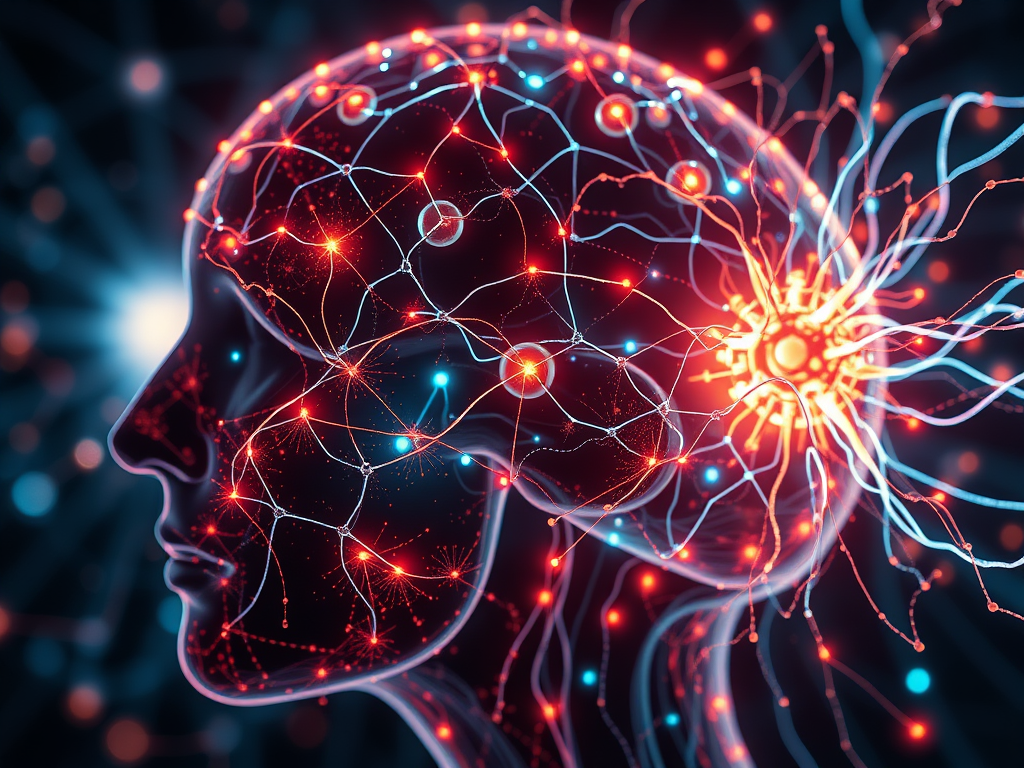
Taking time to think about bio electromagnetic links, and free your mind…
Brain Implants and Mind Reading: An Overview
Introduction
Brain implants, also known as brain-computer interfaces (BCIs), have made significant strides in recent years, particularly in the realm of mind reading. These technologies aim to decode brain signals and translate them into speech, text, or other forms of communication. This breakthrough has the potential to revolutionize the lives of individuals with severe paralysis or speech disorders, but it also raises important ethical and privacy concerns.
Recent Developments
Near-Synchronous Brain-to-Voice Streaming
- Researchers at the University of California, Berkeley, have developed a brain implant that uses artificial intelligence (AI) to decode a person’s thoughts and stream them through a speaker in near real-time. This is the first time such near-synchronous brain-to-voice streaming has been achieved
- The implant, known as a neuroprosthesis, uses electrodes placed on the brain’s surface to identify and interpret speech signals. The AI algorithm can decode neural data and convert it into synthetic speech with a delay of up to 3 seconds, which is faster than previous versions that had a delay of about 8 seconds.
High-Accuracy Speech Decoding
- Scientists at Duke University have created a brain implant that can translate brain signals into words with high accuracy. The device, which is smaller and more efficient than previous models, can pack 256 microscopic sensors onto a postage stamp-sized piece of medical-grade plastic.
- The implant has been tested on patients undergoing brain surgery for other conditions, and it has shown promising results in predicting the sounds a person is trying to make based on brain activity recordings.
Internal Speech Decoding
- Researchers at the California Institute of Technology have developed a brain implant that can decode internal speech with nearly 80% accuracy. The device can detect different internal speech strategies, including reading words silently and visualizing the objects the words depict.
- This technology works by placing electrodes in specific areas of the brain, such as the supramarginal gyrus, which plays a crucial role in both spoken and written language processing.
Ethical and Privacy Concerns
Privacy and Security
- The ability to read and decode internal thoughts raises significant privacy concerns. Experts warn that neural interfaces could be misused by governments, corporations, or other entities to access and share neural data.
- Anil Seth, Professor of Neuroscience at the University of Sussex, emphasizes the need for high levels of security to control who can read one’s mind, how they can read it, and when they can read it.
Ethical Boundaries
- The Royal Society, the UK’s Academy of Sciences, has called for governments to set ethical boundaries for the development and use of neural interfaces. They warn that these technologies could change the very nature of what it means to be human and pose risks to privacy and human rights.
- Jennifer Boger, director of the Intelligent Technologies for Wellness and Independent Living Lab at the University of Waterloo, stresses the importance of responsible development and a multidisciplinary approach to address the complex ethical questions surrounding these technologies.
Potential Applications
Medical Applications
- Brain implants have the potential to treat a wide range of medical conditions, including dementia, paralysis, mental health conditions, and obesity.
- For individuals with severe paralysis, these implants can provide a synthetic voice, allowing them to communicate more effectively.
Communication and Interaction
- The technology could enable people who are unable to speak or type to communicate using their thoughts alone. This could be particularly beneficial for those with conditions like amyotrophic lateral sclerosis (ALS) or locked-in syndrome.
- Facebook and other tech companies are exploring the use of neural interfaces for telepathic typing, which could allow users to type or communicate by thinking about the words they want to say.
Future Prospects
Advancements and Challenges
- While the current technology is still in the experimental stage, researchers are optimistic about making further advancements. The goal is to achieve more natural-sounding synthetic speech and reduce the delay between thought and speech.
- However, there are still challenges to overcome, including improving the accuracy and speed of the technology, ensuring it works for a broader range of individuals, and addressing the ethical and privacy concerns.
Long-Term Vision
- In the long term, neural interfaces could have far-reaching implications. They could potentially enable people to control external devices, such as wheelchairs or exoskeletons, using their thoughts alone.
- The technology could also be used to monitor and enhance cognitive functions, potentially leading to new treatments for neurological conditions and even enhancing human capabilities.
Summary Table
| Aspect | Details |
|---|---|
| Recent Developments | – Near-synchronous brain-to-voice streaming achieved by UC Berkeley – High-accuracy speech decoding by Duke University – Internal speech decoding with 80% accuracy by Caltech |
| Ethical and Privacy Concerns | – Privacy risks and potential misuse by governments and corporations – Need for high levels of security and ethical boundaries |
| Potential Applications | – Medical treatments for conditions like dementia, paralysis, and mental health disorders – Communication for individuals with severe paralysis or speech disorders – Telepathic typing and control of external devices |
| Future Prospects | – Improving accuracy, speed, and naturalness of synthetic speech – Addressing ethical and privacy challenges – Long-term vision includes enhanced cognitive functions and control of external devices |
Bioelectromagnetics is a field that explores the interactions between electromagnetic fields and biological entities, including the human brain. This field has significant implications for both human health and the integration of artificial intelligence (AI) technologies. Here are some key points regarding the current research and applications of bioelectromagnetics in the context of human and AI interactions:
Bioelectromagnetic Techniques in Human Neuroscience
- Magnetoencephalography (MEG) and Electroencephalography (EEG): These techniques are widely used to study brain activity by measuring the magnetic fields and electrical potentials generated by neural activity, respectively. They provide high temporal resolution, making them valuable for understanding brain dynamics and cognitive processes. The principle of Helmholtz reciprocity underlies both techniques, providing a common ground for their application and interpretation.
- Transcranial Magnetic Stimulation (TMS) and Transcranial Electric Stimulation (TES): These non-invasive methods use electromagnetic fields to modulate brain activity. TMS uses magnetic fields to induce electric currents in the brain, while TES applies direct or alternating electric currents to the scalp. These techniques are used for both therapeutic and research purposes, such as treating depression and studying brain function.
AI and Bioelectromagnetics in Healthcare
- Point-of-Care Testing: AI is being integrated into point-of-care testing to improve healthcare delivery, especially in rural and remote areas. Techniques such as lateral flow immunoassays, bright-field microscopy, and hematology are being enhanced with AI to provide faster, more accurate, and more accessible diagnostic tools.
- Nanotechnology and Drug Delivery: AI and bioelectromagnetics are being combined to develop more effective drug delivery systems. For example, nanomolecules can be targeted to specific areas of the body, such as tumor tissues, to increase drug concentration and reduce systemic side effects.
Bioelectromagnetic Research and AI
- Modeling and Simulation: AI algorithms are used to model and simulate the interactions between electromagnetic fields and biological tissues. This helps in understanding the effects of various frequencies and intensities of electromagnetic fields on the human body, which is crucial for safety assessments and the development of new technologies.
- Electroporation: AI is being used to optimize the parameters for electroporation, a technique that uses short, intense electrical pulses to increase the permeability of cell membranes. This is particularly useful in cancer treatment, where it can enhance the delivery of therapeutic agents into cells.
Ethical and Safety Considerations
- Exposure Assessment: Research is ongoing to assess the exposure to radio frequency electromagnetic fields from various sources, such as smart utility meters and mobile phones. This is important for ensuring that exposure levels are within safe limits and for developing guidelines to protect public health.
- Thermal and Non-Thermal Effects: The distinction between thermal and non-thermal effects of electromagnetic fields is crucial for understanding their biological impacts. Thermal effects are due to the heating of tissues, while non-thermal effects are more complex and can include changes in cell function and behavior.
Future Directions
- Integration of AI and Bioelectromagnetics: The future of bioelectromagnetics lies in the integration of AI to enhance the precision and effectiveness of diagnostic and therapeutic techniques. This includes the development of more biologically-friendly and ecologically-sustainable technologies.
- Neural Networks and Deep Learning: AI techniques, particularly neural networks and deep learning, are being used to analyze large datasets from bioelectromagnetic studies. This can lead to new insights into brain function and the development of more advanced AI models that can better simulate human intelligence.
In summary, the field of bioelectromagnetics is at the forefront of integrating human biology with AI technologies, leading to innovative applications in healthcare, diagnostics, and therapy. Ongoing research continues to explore the complex interactions between electromagnetic fields and biological systems, with the goal of improving human health and well-being.
References:
- Near-Synchronous Brain-to-Voice Streaming
- Source: University of California, Berkeley
- Link: UC Berkeley Near-Synchronous Brain-to-Voice Streaming
- High-Accuracy Speech Decoding
- Source: Duke University
- Link: Duke University High-Accuracy Speech Decoding
- Internal Speech Decoding
- Source: California Institute of Technology (Caltech)
- Link: Caltech Internal Speech Decoding
- Ethical and Privacy Concerns
- Source: The Royal Society
- Link: The Royal Society Ethical Boundaries for Neural Interfaces
- Privacy and Security
- Source: Anil Seth, Professor of Neuroscience at the University of Sussex
- Link: Anil Seth on Neural Interface Privacy
- Potential Applications
- Source: Facebook (now Meta)
- Link: Facebook Telepathic Typing Research
- Future Prospects
- Source: Jennifer Boger, Director of the Intelligent Technologies for Wellness and Independent Living Lab at the University of Waterloo
- Link: Jennifer Boger on Ethical Development of Neural Interfaces
- Long-Term Vision
- Source: Neuralink
- Link: Neuralink’s Vision for the Future
- General Overview of Brain Implants
- Source: Nature
- Link: Nature Article on Brain Implants
- Duke University Brain Implant Details
- Source: Duke University
- Link: Duke University Brain Implant Details
- UC Berkeley Brain Implant Details
- Source: University of California, Berkeley
- Link: UC Berkeley Brain Implant Details
- Jennifer Boger on Neural Interfaces
- Source: University of Waterloo
- Link: University of Waterloo News on Neural Interfaces
- The Royal Society on Neural Interfaces
- Source: The Royal Society
- Link: The Royal Society Report on Neural Interfaces
Certainly! Here are additional references and links to provide more depth and context on the integration of bioelectromagnetics and AI in human applications:
References and Links
- Magnetoencephalography (MEG) and Electroencephalography (EEG)
- Source: National Institutes of Health (NIH)
- Link: NIH MEG and EEG Overview
- Source: Journal of Neurophysiology
- Link: Journal of Neurophysiology MEG and EEG Article
- Transcranial Magnetic Stimulation (TMS) and Transcranial Electric Stimulation (TES)
- Source: National Institute of Mental Health (NIMH)
- Link: NIMH TMS and TES Overview
- Source: The Lancet Psychiatry
- Link: The Lancet Psychiatry TMS and TES Article
- AI in Point-of-Care Testing
- Source: Nature Biomedical Engineering
- Link: Nature Biomedical Engineering AI in Point-of-Care Testing
- Source: Journal of Point-of-Care Research
- Link: Journal of Point-of-Care Research AI in Point-of-Care Testing
- Nanotechnology and Drug Delivery
- Source: Nature Reviews Materials
- Link: Nature Reviews Materials AI and Nanotechnology in Drug Delivery
- Source: Advanced Drug Delivery Reviews
- Link: Advanced Drug Delivery Reviews AI in Nanotechnology
- Modeling and Simulation in Bioelectromagnetics
- Source: IEEE Transactions on Biomedical Engineering
- Link: IEEE Transactions on Biomedical Engineering Modeling and Simulation
- Source: Journal of Computational Neuroscience
- Link: Journal of Computational Neuroscience Bioelectromagnetics Simulation
- Electroporation and AI Optimization
- Source: Nature Communications
- Link: Nature Communications AI in Electroporation
- Source: Biophysical Journal
- Link: Biophysical Journal Electroporation and AI
- Exposure Assessment and Safety
- Source: World Health Organization (WHO)
- Link: WHO Electromagnetic Fields and Public Health
- Source: International Commission on Non-Ionizing Radiation Protection (ICNIRP)
- Link: [ICNIRP Guidelines on Exposure to Electromagnetic Fields](https://www.icnirp.org/cms/upload/publications/ICNIRP ELF guidelines 2020.pdf)
- Thermal and Non-Thermal Effects of Electromagnetic Fields
- Source: Bioelectromagnetics Society
- Link: Bioelectromagnetics Society Thermal and Non-Thermal Effects
- Source: Physics in Medicine and Biology
- Link: [Physics in Medicine and Biology Thermal and Non-Thermal Effects](https://iopscience.iop.org/article/10.1088/1361
Discover more from Identropy
Subscribe to get the latest posts sent to your email.
 Identropy